Thursday, July 25, 2013

Train derailment closes Port of Tampa


Tampa (Fla.) Fire Rescue crews responded to a train derailment Thursday, July 25, 2013, at the Port of Tampa. (Photo: WTSP-TV, Tampa, Fla.)


Story Highlights Ten rail cars were completely on their sides The cause of the derailment is not yet known Firefighters laid a coating of foam on top of the spill to prevent fire

TAMPA, Fla. -- Firefighters used foam to clean up ethanol that leaked from a CSX train that derailed at the Port of Tampa.


The main portion of the port remained closed and may stay blocked off for much of the day after Tampa Fire Rescue officials say at least 12 rail cars derailed early Thursday.


The train was coming into the port at 1 a.m. when it left the tracks, pulling 12 cars off of the rails -- and sending 10 of those completely onto their sides, according to fire department spokesman Capt. Lonnie Benniefield.


Responders found three of the cars leaking ethanol, a flammable liquid that's often mixed with gasoline to fuel cars and trucks. When it's shipped by rail, ethanol is usually stored in a form that is more flammable than gasoline.


Hazmat-trained firefighters have laid a coating of foam on top of the spill to keep it from catching fire.


The toppled train is blocking the main entrance to the Port of Tampa.


Benniefield said equipment to place the rail cars back on the tracks is being transported from Atlanta to Tampa by railroad company CSX. Righting the entire train could take until late Thursday or early Friday.


No one was hurt in the train derailment, which was originally reported as involving 15 cars. Benniefield said it's not clear yet why the train jumped the tracks. CSX and government agencies are expected to investigate the accident.


Ethanol typically breaks down within a few weeks in the environment, so the impact to the soil and groundwater may be limited.


SAC Capital Is Indicted


Federal authorities announced a raft of criminal charges on Thursday against SAC Capital, the hedge fund run by the billionaire Steven A. Cohen, an unusually aggressive move that could cripple one of Wall Street's most successful stock trading firms.


In the 41-page indictment that includes four counts of securities fraud and one count of wire fraud, prosecutors charged the fund and its units with carrying out a broad insider trading scheme between 1999 and 2010. The case seeks to attribute certain criminal acts of employees to the company itself.


The indictment also takes aim at SAC for "an institutional indifference" to wrongdoing that "resulted in insider trading that was substantial, pervasive and on a scale without known precedent in the hedge fund industry."


The case, announced by federal prosecutors and the F.B.I. in Manhattan, is the culmination of an investigation that spanned a decade. As the federal government mounted a relentless crackdown against insider trading, an investigation that reached into corporate board rooms and Wall Street trading floors, it zeroed in on Mr. Cohen as a central target.


Without evidence directly linking Mr. Cohen to illicit trades, the government stopped short of criminally charging him. But the case is a blow to him all the same. Not only does the firm name bear his initials, but Mr. Cohen also owns 100 percent of the firm he founded with his own money more than two decades ago.


Mr. Cohen, 57, an avid collector of art and real estate, also faces civil charges. The indictment on Thursday comes on the heels of the Securities and Exchange Commission's filing a civil action last week that accused Mr. Cohen of failing to supervise employees suspected of insider trading. The government's effort to root out insider trading on Wall Street has swept up more than 80 people; of those, 73 have either been convicted or pleaded guilty.


But Thursday's indictment against SAC itself represents a new phase in the investigation. Criminal charges against large companies are rare, given the collateral consequences for the economy and innocent employees. After the Justice Department indicted Enron 's accounting firm, Arthur Andersen, in 2002, the firm collapsed and 28,000 jobs were lost.


In the SAC case, the indictment could deliver a death blow to the fund. Already, amid several guilty pleas by former SAC employees and a series of civil actions brought by federal securities regulators, the fund's investors have pulled about $5 billion of $6 billion in outside money from the firm. Those that have withdrawn money include major financial-industry players like Blackstone Group and Citigroup.


That exodus could gain steam in the wake of the indictment. SAC also must assuage concerns from Goldman Sachs and other large banks that trade with SAC and finance its operations. There is little precedent for what a criminal charge would mean for SAC and its banking relationships, but legal experts said that an indictment could trigger default provisions in the fund's agreements with its trading partners, meaning that it would force brokerage firms to stop doing business with the fund.


But the charges won't necessarily destroy SAC. Until now, Mr. Cohen has been largely shielded from the crippling effects of mass investor withdrawals. Of the $15 billion that SAC managed at the beginning of the year, about $8 billion is Mr. Cohen's.


One option for Mr. Cohen would be to shut down SAC and open up a so-called "family office" that managed his own personal fortune. But Securities and Exchange Commission, as part of a civil action filed against Mr. Cohen last week that accuses him of failing to supervise his employees, could seek to have him banned from the financial-services industry for life, an outcome that would prohibit him from trading stocks.


Mr. Cohen could also deploy his deep Wall Street Rolodex to sustain the fund. He sits on the vaunted board of the Robin Hood Foundation, a nonprofit fighting poverty, with David M. Solomon, the co-head of investment banking at Goldman Sachs. He also serves as a trustee of Brown University, alongside Brian T. Moynihan, the chief executive of Bank of America. (One of Mr. Cohen's seven children graduated from Brown.)


SAC could also stem concerns by combating the criminal charge. The government will face off against an army of lawyers from two of the world's most sophisticated law firms: Willkie Farr & Gallagher and Paul, Weiss, Rifkind, Wharton & Garrison. Martin Klotz at Willkie and Daniel J. Kramer at Paul Weiss have spearheaded the SAC representation.


For the criminal case, the fund has also enlisted Mark F. Pomerantz and Theodore V. Wells Jr. of Paul Weiss. Mr. Pomerantz has been involved in a number of insider-trading cases, including the defense of Samuel Waksal, the former chief executive of Imclone Systems, and Joseph Contorinis, a former portfolio manager at Jefferies Group. Mr. Chiasson, the former SAC employee convicted last year, recently hired him to handle his appeal.


Mr. Wells is considered one of the country's preeminent trial lawyers, and he and Mr. Pomerantz work closely together on many of their cases. Among Mr. Wells's high-profile assignments have been political corruption cases, including representing Robert Torricelli, the former United States senator; I. Lewis Libby, the former adviser to Vice President Cheney; and Eliot Spitzer, the former New York governor.


How will the 'people's pope' handle security issues in Brazil?


Ricardo Moraes / Reuters


RIO DE JANEIRO, Brazil - When Pope Francis greets his flock on Rio's white-sand Copacabana beach this week during his first international trip, he'll do so in the same open-topped jeep "popemobile" he uses at the Vatican, breaking down the bulletproof barrier between the pontiff and the people.


But while he'll be traveling with only two Swiss Guards dressed in discreet civilian clothes, the "people's pope" may still have a hard time connecting with the 2 million people expected to greet him. More than 10,000 army, air force and navy officers, as well as 12,000 regular police and 1,700 elite security forces, will guard him during his 18 public appearances during his weeklong visit, starting Monday, to Brazil for World Youth Day.


Brazilian authorities have been meeting day and night to perfect the security plan for Pope Francis' visit in what has been described as "the biggest police operation in the city's history," by Roberto Alzir Dias Chaves, Brazil's undersecretary for major events.


The armed forces will handle security of the air space, border surveillance, chemical and biological weapons, maritime defense and cybersecurity, according to a defense ministry spokesman. There will be maritime patrols off Copacabana beach during the pope's welcoming ceremony there Thursday.


Authorities have even banned masks during the pope's events, according to local Brazilian press. Guy Fawkes masks were worn during massive anti-government protests in Rio in June - and authorities fear a repeat. The anti-government protests spread to more than 100 cities and left dozens injured.


Rio is notorious for crime - from rape to robbery - and has been rated as "critical" for crime by the U.S. State Department for the past 25 years.


While the pope's schedule has been widely distributed, a highly placed Brazilian security official, who spoke on condition of anonymity given the sensitivity of the issue, told NBC News that some venue sites and meeting times could still change.


But the Vatican is brushing off any security concerns, saying Pope Francis "will do what he has always done."


"He likes to greet pilgrims in an open-roof jeep in St. Peter's Square, and he will do the same in Rio," Vatican spokesperson Federico Lombardi told the press last week.


The Vatican is actually asking young pilgrims to help pitch in and provide part of the security at two large events on Copacabana beach. Instead of a physical fence, the Vatican will ask pilgrims to link arms to form a human chain.


World Youth Day, the Roman Catholic Church's biennial event, is an effort to energize the faithful - particularly young people - as secularism and other faiths continue to make inroads.


Out of Brazil's 200 million people, 73 percent identify themselves as Catholic.


Antonio Lacerda / EPA


But concerns over the pope's visit have also grown recently following the widespread protests in June against an increase in public services fees, corruption and costly stadium projects for the 2014 World Cup.


Brazilians have been in an uproar over the amount of money the government has had to spend to support this visit - estimated to be about $53 million - at the same time that people are demanding better health care, education and public transportation.


Security forces are bracing for at least six protests during the papal visit. One of the intelligence teams is tasked with monitoring social media to track the protests.


Leonardo Portill, 26, questioned whether the expense and inconvenience of the pope's visit are worth it. Normally his commute to one of the luxury hotels on Copacabana beach lasts 40 minutes. On Friday it took him almost three hours.


"If the kids [participating in World Youth Day] were bringing in tourist dollars, I would not mind the hassles. But they are staying with Catholic families, so they are costing the city money instead of earning revenue," he said.


Felipe Motta, a 22-year-old student, also questioned the costs. "I don't see a problem for the pope's visit. What I don't agree on is the cost of his visit. Public funds spent on this event are huge. Millions of dollars spent, and we have poor public services."


Marcos Brindicci / Reuters


But others were looking forward to the big event.


"It's a very important moment for us," said Otavio Miranda, a 51-year-old teacher. "It's a new pope, a modern pope. It's a historic moment, and Pope Francis will bring his blessings to all Latin America, not only Brazil. Our country needs this positiveness."


Luciana Martins, a 39-year-old salesperson, agreed. "I'm very excited about the pope's visit. What I like most about him is his simplicity, and I'm looking forward to the changes that he is going to implement," she said. "He will visit Brazil in difficult times, I hear there will be some protests, but I hope he will bring peace and harmony to us all."


The pope's visit, in addition to the Thursday welcoming ceremony at Copacabana beach, will include a meeting with Brazil's President Dilma Rousseff, a visit to one of Rio's poor favela neighborhoods, a meeting with inmates and a visit to the Aparecida shrine, Brazil's most revered Catholic pilgrimage site.


NBC's Petra Cahill, Luis Eduardo Lerina and Reuters contributed to this report. Related:

Their View | Flip


What are the legitimate powers of the president? Of Congress?


Some people's answers to these enduring questions seem to shift dramatically depending on a single (and seemingly irrelevant) fact: whether the current president is a Democrat or a Republican.


These shifts amount to "institutional flip-flops," a defining feature of modern political life.


In recent weeks, the filibuster has been the most prominent example. Under President George W. Bush, Democratic senators tended to defend its use, while Republican senators opposed it.


Under President Barack Obama, of course, the two sides have essentially flipped. (Clarifying note: My topic throughout is the flip-flop, not which party has engaged in worse or more aggressive behavior.)


Does the president have broad power to make recess appointments? Bush certainly thought so. Many Republican senators agreed, but some Democratic senators were pretty outraged.


Under Obama, it's the Republicans who tend to be outraged and the Democrats who are supportive or quiet.


Bush issued a large number of signing statements, in which he asserted the constitutional prerogatives of the president as the basis for questioning legislation that, in his view, intruded on those prerogatives.


Democrats vehemently objected.


By contrast, Obama's signing statements haven't produced a lot of protest from Democrats. (True, he has issued many fewer signing statements, but some of them have been pretty significant, including several that involve presidential authority to protect national security.)


It is tempting to conclude that when some members of Congress make broad and seemingly universal pronouncements about the importance of respecting executive power, what they mean is that they like and trust the current president.


And when some legislators emphasize the importance of allowing Congress to check the power of the president, they mean they distrust the current occupant of the Oval Office.


To the extent this is so, people's general views about institutional questions aren't deeply held and are highly influenced by a judgment about the particular person in power. Nor should there be any deep mystery here.


At least some institutional questions are pretty difficult, with no obvious answer. Are signing statements an intrusion on Congress' lawmaking authority or a legitimate way of protecting the presidency?


Almost everyone agrees the filibuster has an appropriate place in Congress. Almost everyone also agrees it can be abused.


Under different presidents, Republicans and Democrats have made plausible arguments about the importance of providing safeguards against the current majority. They also have made plausible arguments about the importance of avoiding endless gridlock.


The precise line dividing legitimacy from abuse or safeguards from gridlock isn't self-evident.


When institutional questions have clear answers, we are far less likely to observe flip-flopping.


No member of Congress seriously argues that the president can be impeached merely because his policies aren't working. No president contends Congress lacks the authority to ratify treaties.


All of the recent institutional disagreements take place within the context of an established background, which is unquestioned by Republicans and Democrats.


Nonetheless, institutional flip-flops are a big problem, because they suggest a degree of hypocrisy and because they ensure that important questions will remain unsettled - and a source of frequent fighting - for long periods.


What might be done?


Moral and political theorists have a potential answer. They suggest that serious problems can be best resolved if we adopt a "veil of ignorance," in which we ask: If we knew absolutely nothing about who would be helped and who would be hurt, how would we proceed?


Constitutions themselves tend to be adopted behind such a veil, because constitution-makers often don't know who will be occupying particular offices. Well-functioning constitutions endure partly for that reason.


Can Democrats and Republicans adopt a veil of ignorance to settle institutional disagreements? Questions about the filibuster, recess appointments and signing statements aren't easy to answer, but they start to become more tractable once we distance ourselves from today's controversies and personnel.


For those who seek a veil of ignorance, an attractive approach might be to establish a specific date by which some new settlement would take place - say, after the 2016 elections. It isn't a bad idea, but it might not be feasible.


Those who support the current president, and who seek change on his behalf, might be unenthusiastic and even nervous about this approach, because it would fail to help him (and it might end up empowering the other side).


Those who oppose the current president might also be unenthusiastic, because it would do nothing for them in the short run, and it might take away their power in the long run.


Fortunately, there is another possibility.


In the private sector, people often succeed in using something close to a veil of ignorance - and reduce the risk of flip-flops - simply by bracketing their short-term self-interest and working together to settle larger questions about how to make institutions function well over time.


It isn't too much to ask our elected representatives to do the same.


Cass R. Sunstein, a professor at Harvard Law School, is a Bloomberg View columnist. He is the former administrator of the White House Office of Information and Regulatory Affairs, the co-author of "Nudge" and author of "Simpler: The Future of Government."


Analysis: History offers few happy endings for Detroit to follow


Credit: Reuters/ Rebecca Cook


Downtown Detroit is seen looking south along Woodward Avenue in Detroit, Michigan July 21, 2013.


History, however, has few story book endings to offer as a guide when it comes to U.S. municipal bankruptcies.


Fact is, they are rare events - just 61 local governments have gone through Chapter 9 bankruptcy since 1954 - and while the process is devoted to restructuring debt and provides temporary cash flow relief, it does not help a city enhance its revenue or economic outlook. Furthermore, cities typically lose access to capital markets in the wake of a bankruptcy.


"Detroit has a very high level of debt and the bankruptcy can correct some of it, but is it going to turn around its economy quickly? That's probably unlikely," said Jeff Previdi, Managing Director and Co-Head of Local Government Ratings at Standard and Poor's.


To be sure, Detroit's financial disarray was decades in the making: a downward spiral of company departures and failures accompanied by a dramatic drop in its population, to just below 700,000 from a peak of 1.8 million, and a rise in crime.


Once the cradle of U.S. automotive industry and Motown music, Detroit appears to have run out of alternatives to bankruptcy barring a bailout from the state.


New York, Cleveland and Philadelphia previously teetered on the edge of bankruptcy but Detroit is the first major U.S. city to file for bankruptcy, pressured by $18.5 billion of outstanding liabilities.


To this point, only much smaller local governments have gone the bankruptcy route without external help and facing similar issues.


Take for example Vallejo, California, with about 116,000 people. It spent more than three years in bankruptcy from 2008 to 2011, weighed down by generous labor contracts and retirement benefits.


The city, about 30 miles northeast of San Francisco, was allowed to terminate its collective bargaining agreements, but it never renegotiated some $128 million of unfunded pension liabilities.


And while Vallejo generated about $34 million in savings on some of the liabilities it faced heading into bankruptcy, those have been nearly matched by expenses related to the bankruptcy itself, according to a 2012 study by Standard & Poor's.


Now two years after emerging from Chapter 9, it has yet to balance its budget, and the police force is roughly half its previous size. Vallejo remains shut out of the municipal bond market and cannot raise money to address much needed infrastructure repairs.


"We have not done enough, and the budget we just adopted in June still has a $5.2 million dollar deficit on an $82 million general fund budget," Vallejo City Manager Daniel Keen said.


Both Vallejo and nearby Stockton, which before Detroit's filing last week had been the most populous city to file for bankruptcy, have seen further increases in crime after seeking protection from creditors. Stockton, with nearly 300,000 people, was granted permission to enter Chapter 9 protection in April and will file a debt-adjustment plan later this year.


ORANGE COUNTY: A RARE SUCCESS


The brightest post-bankruptcy story is perhaps California's Orange County. But its 1994 bankruptcy - the largest in history at the time - stemmed from $1.7 billion in bad derivative bets, not the kind of grinding economic slump and population flight that feature so prominently in the Detroit case.


Orange County, home to Disneyland and with median household income of more than $75,000, nearly three times Detroit's, has suffered few lingering effects from its 18 months in Chapter 9.


"Most county residents were not impacted," said Mark Baldassare, president of the Public Policy Institute of California. "Police services, streets and road, schools, things that people depend on local government for, went on."


Orange County also stands out as the only bankruptcy alumnus to successfully re-enter the municipal bond market. But its recovery bonds were fully backed by bond insurer MBIA Insurance Corp, an option that may not be available in the future since the 2007-2009 financial crisis crushed the bond insurance business.


JEFFERSON COUNTY: FUTURE IS CLOUDED


And the jury is still out on Jefferson County, Alabama, which before Detroit had held the mantle as the largest municipal bankruptcy ever at $4.2 billion that stemmed from debts to overhaul and expand its sewer system.


The county, home to Birmingham, the state's largest city, is on track to leave bankruptcy by year's end. By many measures, it is thriving: its jobless rate is just 5.5 percent compared with the U.S. rate of 7.6 percent; it has a diverse employer base; and private business investment is robust, totaling $579 million in 2012, more than double a 10-year average, according to the Birmingham Business Alliance.


Nonetheless, local officials are bracing for years of stunted government services such as few emergency crews to deal with deadly tornadoes, rising utility costs, and limited public resources for boosting local commerce.


"We have no money for economic growth," said David Carrington, president of the Jefferson County Commission and a negotiator of the county's debt-adjustment plan filed on June 30. "There will be on-going deterioration of infrastructure."


Road repairs in Jefferson County, home to 660,00 people, already lag other sizeable Alabama counties, according to Carrington, who also worries federal officials will sue over the county's below-par jails.


"Like any company, you have to grow, or you are going to die," said Robert Brooks, finance professor at the University of Alabama. "This is going to be a strain and make it unattractive for businesses to move into the Birmingham area."


Jefferson County also hopes to follow in Orange County's footsteps in returning to the bond market, with a $1.9 billion debt deal planned for later this year that is central to its negotiated reorganization plan. With slim prospects for the kind of bond insurance enhancement obtained by Orange County, however, the deal is likely to saddle the county with outsized interest rates for decades.


"Clearly, with such a huge liability for such an extended length of time, it is like having a ball and chain around our ankle," said Brooks.


In the end, though, the enduring costs of a municipal bankruptcy are tallied in more than dollars.


"The impacts of a bankruptcy on a community are pretty hard to predict but they are not very good. There is a loss of confidence ... there is a lot of anxiety in the city's workforce," Vallejo's Keen said. "We are still the city that all know for having being in bankruptcy."


(Additional reporting by Jim Christie and Verna Gates; Editing by Dan Burns and Tim Dobbyn)


Wednesday, July 24, 2013

Bo Xilai Charged With Corruption, Bribery, Abuse of Power

Former Chinese Politburo member Bo Xilai was charged with bribery, corruption and abuse of power, as the Communist Party's new leadership seeks to bring to a close its most serious political scandal in two decades.


The charges were broadcast in a one-sentence report on the official Xinhua News Agency.


The formal indictment made against Bo today means that under Chinese law, a court will probably deliver a judgment within a month. Bo's wife Gu Kailai was convicted of murdering British businessman Neil Heywood last August after a one-day trial that produced a suspended death sentence.


A conviction will cap the party's handling of a case that roiled last year's leadership transition in which Xi Jinping took over as general secretary. The party is seeking to shore up its legitimacy as the new leaders tackle corruption, including sex tapes featuring senior officials and revelations of cadres living opulent lifestyles.


"This leadership looks stable enough and bedded in now, and Bo marginalized enough, for them to go ahead with this," Kerry Brown, a former U.K. diplomat and a professor of China studies at the University of Sydney said in an e-mail before the announcement. "It sends a strong, confident message, and clears away the final collateral from last year's power transition, so from that point of view handling it now would make political sense."


Bo, 64, once seen as a possible candidate for the ruling Politburo Standing Committee, was expelled from the Communist Party in September. He was accused of taking bribes throughout his career and abusing his power in the homicide case against his wife, according to Xinhua. He also had improper sexual relations with "a number" of women, Xinhua reported.


To contact Bloomberg News staff for this story: Michael Forsythe in Beijing at mforsythe@bloomberg.net; Nicholas Wadhams in Beijing at nwadhams@bloomberg.net


To contact the editor responsible for this story: Peter Hirschberg at phirschberg@bloomberg.net


Enlarge image


Senate passes student loan fix


People walk past the Alma Mater statue on the Columbia University campus on July 1, 2013 in New York City. (Photo: Mario Tama, Getty Images)


Story Highlights The legislation, affecting seven million students this year, would tie loan rates to the financial markets The Republican-controlled House is expected to pass it before the August break President Obama "strongly supports" the bill, the White House said Wednesday

WASHINGTON--Despite strong opposition from liberals, the Democratic-controlled U.S. Senate approved a bill Wednesday to tie federal college loan rates to financial markets to retroactively roll back an unpopular July 1 rate hike.


The bipartisan legislation was approved 81-18.


The GOP-controlled U.S. House is expected to approve the legislation before the August recess. President Obama supports the bill and commended the bipartisan effort that produced it, the White House said in a statement issued Wednesday. The legislation will affect seven million students heading to college this fall.


The bill will bring down interest rates for subsidized Stafford loans in the short-term. These rates doubled to 6.8% on July 1 because Congress could not come to terms on an agreement ahead of that deadline. Under the legislation, undergraduates will be able to borrow at 3.9% for this school year; graduate students at 5.4%, and parents at 6.4%.


Liberal Democrats are wary that the legislation could allow interest rates to rise above 6.8% in future years as the financial markets recover and interest rates rise.


"The truth of the matter is, if the bill on the floor passes without amendment, it would be a disaster for the young people of our country who are looking to go to college and for the parents who are looking to help pay their bills," said Sen. Bernie Sanders, I-Vt., who voted against the bill. Sanders offered an amendment to sunset the legislation in two years, but it was rejected.


The legislation includes loan interest rate caps at 8.25% for undergraduates, 9.5% for graduates, and 10.5% for parents. The non-partisan Congressional Budget Office estimates rates would not hit the rate caps within the next decade.


An effort by Sens. Jack Reed, D-R.I., and Elizabeth Warren, D-Mass., to put tighter interest rates caps on student loans was also rejected. Reed and Warren also voted against the bill.


Instead of Congress continuing to set interest rates on student loans, future borrowers will see their loans tied to the U.S. Treasury 10-year borrowing rate. The legislation creates a three tier systems, to charging an additional 1.85% for undergraduate Stafford loans, 3.4% for graduate Stafford loans, and 4.4% for PLUS loans, which parents can take for their children. The interest rate would be fixed over the life of the loan.


The legislation provided a rare area of accord between the Obama administration and congressional Republicans. The president included a similar proposal in his budget this year, which House Republicans touted in initial legislation.


House Speaker John Boehner's office noted the similarities between the House GOP proposal and the final bill. "A victory indeed, and one that shows when we have common ground, we should seize it on behalf of the people we serve," said a blog posted Wednesday on the speaker's official Web site.


Man Who Killed NYPD Officers Gets Death Penalty


A New York City street gang member was given the death penalty on Wednesday in the execution-style slayings of two undercover police officers in 2003 - the latest chapter in a case that's seen his original death sentence overturned, his behind-bars affair with a prison guard exposed and the massive cost of his defense questioned.


It took a jury just one day to deliberate in federal court in Brooklyn before deciding the fate of Ronell Wilson.


Another jury had found Wilson guilty in the point-blank shootings of undercover officers James Nemorin and Rodney Andrews. The gunman shot both men in the head after one pleaded for his life.


The first jury also sentenced Wilson in 2007 to die by lethal injection, making him the first federal defendant to receive a death sentence in New York City since the 1950s. But an appeals court threw out the sentence in 2010 and prosecutors chose to repeat the penalty phase rather than let Wilson serve an automatic life term.


U.S. District Judge Nicholas Garaufis questioned the decision, saying that it put taxpayers on course to spend millions of dollars more on Wilson's defense. He noted that he had just presided over a capital case for a mobster where the defense bill was $5 million and the jury chose to impose a life sentence.


Officials revealed in February that, after being transferred from federal death row in Indiana to a Brooklyn lockup to await the proceedings, the 31-year-old Wilson fathered a child with a jail guard. She's since pleaded guilty to an illegal sex act.


The new set of jurors, though not deciding Wilson's guilt, once again heard about how the victims were posing as illegal gun buyers. The pair met with Wilson for what they thought was a deal to buy a Tec-9 submachine gun. But Wilson decided to rob them instead and ended up shooting them.


Prosecutors cited a scrap of paper Wilson was carrying when he was arrested as proof he was a cold-blooded killer. It had the rap lyrics saying that if he was ever crossed, he would put "45 slugs in da back of ya head" and "ain't goin stop to Im dead."


The government also argued that Wilson's conduct behind bars, including having sex with the jail guard and threatening a gay inmate, made him a bad candidate for a life term.


In asking to spare his life, Wilson "wants you to use your humanity," said Assistant U.S. Attorney Celia Cohen said in closing arguments. "He has shown through his actions that he has absolutely no humanity."


The defense conceded Wilson had committed a horrible crime. Wilson's lawyers instead sought to focus jurors on his background as the product of a crack-addicted mother living with a dozen relatives crammed into an apartment at a crime-infested housing project.


Defense attorney David Stern argued that a life sentence was sufficient punishment for a "limited" and "impulsive" defendant who was never taught right from wrong.


"One day he'll die wearing the same khaki clothes he's worn for 20 or 30 or 40 years," Stern said in closing arguments.


Dozens die as Spanish train derails in Galicia


A train has derailed in north-western Spain, with at least 10 people reported killed.


Spanish railway company Renfe confirmed the train had come off the tracks near the city of Santiago de Compostela in the Galicia region.


A Renfe spokesman told AFP news agency several people had been killed and several more injured.


Spanish news agency Efe quoted police and hospital sources as saying at least 50 people were injured.


Reports said all 13 carriages had left the tracks, and four carriages had overturned completely.


Images showed dozens of emergency workers crowded around ruined carriages.


Passengers were shown lying on the ground being treated.


Renfe said the train carried more than 200 passengers, and was on the express route between Madrid and Ferrol on the Galician coast.


Send your pictures and videos to yourpics@bbc.co.uk or text them to 61124 (UK) or +44 7624 800 100 (International). If you have a large file you can upload here.


Read the terms and conditions

George HW Bush shaves head for 2


Office of George Bush


Former President George H.W. Bush shaved his head on Tuesday, supporting a two-year-old with leukemia whose father is part of the 89-year-old's Secret Service detail.


Members of the Bush Protective Division began removing their hair last week in solidarity with Patrick, who was diagnosed with leukemia last spring, Bush's spokesperson Jim McGrath told CBSNews.com.


Bush said "it was very easy for him to do," McGrath said.


Patrick's prognosis is "good," but his treatment and illness carry a special place in Bush's heart as his daughter Robin died of the same blood disease when she was three.


His Secret Service members have organized a website and 50-mile motorcycle ride through Maine - where Bush resides - to help pay for Patrick's medical bills.


Obama to nominate Kennedy for Japan post


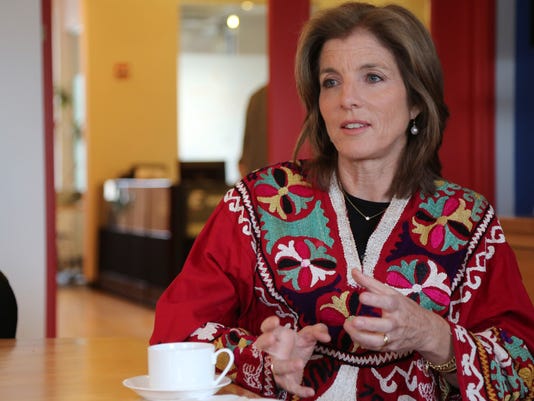
Caroline Kennedy (Photo: Mary Altaffer, AP)


WASHINGTON -- President Obama intends to nominate Caroline Kennedy, a close political ally and the daughter of slain President John F. Kennedy, as U.S. ambassador to Japan, according to news reports.


KABARJOKOWI.BLOGSPOT.COM, citing anonymous sources, said the announcement would come Wednesday.


Kennedy brings star power to the post as the most famous living member of America's best-known Democratic political dynasty.


The nomination rewards Kennedy for providing crucial early support to Obama. She endorsed him in January 2008 over his better-known rival for the Democratic presidential nomination, Hillary Rodham Clinton. Kennedy went on to campaign for his election and to co-chair the vice presidential search committee that selected Joe Biden as his running mate.


By giving Kennedy the nod, Obama also continues a tradition of sending a high-profile envoy to Japan. Previous ambassadors have included former vice president Walter Mondale and two former Senate majority leaders, Mike Mansfield and Howard Baker.


If confirmed by the Senate, Kennedy would be the first female ambassador to represent the United States in Japan.


Kennedy, 55, also would fulfill another family legacy: Her grandfather, Joseph P. Kennedy, served as U.S. Ambassador to the United Kingdom from 1938 to 1940.


The post would place Kennedy at the center of America's relationship with one of the world's largest economies. The current ambassador John Roos, a Silicon Valley lawyer and Obama fundraiser, had no previous diplomatic experience but won praise for his work helping to coordinate the U.S. relief effort following the earthquake and tsunami that devastated northeastern Japan in March 2011.


Kennedy's nomination comes after months of tension in the region.Japan is engaged in territorial disputes with both China and South Korea. Internally, the Japanese government is working to revive the economy and grapple with a rapidly aging population and enormous public debt.


Kennedy, whose nomination has long been expected, has neither extensive government nor business experience.


"Japan is in real crisis right now. This is a moment for some real creative thinking on the part of the United States," said Clyde Prestowitz, an expert on Japan and president of the Economic Strategic Institute. He objects to Kennedy's nomination.


"The only thing Caroline Kennedy has going for her is the Kennedy name," he said. "We keep handicapping ourselves in our global diplomacy by putting people into positions who don't know anything about what they are doing."


The ambassadorship marks the highest profile role undertaken by Kennedy. She has authored 10 books and serves as president John F. Kennedy Presidential Library and Museum. But she spent much of her adult life avoiding the family business of politics until she sought appointment in late 2008 to Hillary Clinton's U.S. Senate seat from New York.


Kennedy, however, withdrew from consideration weeks later after a rocky public rollout and persistent questions about her lack of political experience.


Her defenders note that few U.S. ambassadors could claim closer ties to both Obama and to Secretary of State John Kerry, who served alongside her late uncle, Edward Kennedy, for more than two decades in the U.S. Senate.


Kennedy graduated from Harvard University and has a law degree from Columbia University. She and her husband, Edwin Schlossberg, have three children.


Contributing: David Jackson


Attorney Mark O'Mara Talks Zimmerman Truck Rescue To CNN: This Was ...


George Zimmerman's defense attorney Mark O'Mara was back on TV Monday night, this time to discuss his client's apparent act of heroism last week when he reportedly pulled someone from an overturned truck. O'Mara spoke to New Day's Chris Cuomo, who was filling in for Piers Morgan.


"This is quintessential George," O'Mara told Cuomo, "Always involved in the community, always willing to lend a helping hand. And here we go, four days after the event, something that I could not have planned but turned out to be just pure George." O'Mara said he was surprised that Zimmerman ventured out into the Sanford community so soon after the acquittal, "but that's how he is."


The attorney also offered some insight into how Zimmerman is handling the backlash from so much of the country to his acquittal. "He was sort of surprised at the blow back to the verdict," O'Mara said. "He thought that finally America had gotten a chance to hear all of the facts about the case, and to hear the whole trial, and that they would understand what really happened that night, and that it was truly self-defense. And to hear a lot of the anger that has come since the verdict has surprised him." He acknowledged that threats to the Zimmerman family have increased since the verdict came back.


Reacting to President Obama's speech Friday concerning the trial, O'Mara called it "inappropriate" to suggest that he could have been Trayvon Martin 35 years ago, but could admit that the larger conversation about race is one "that we need to have."


"My frustration has always been," O'Mara elaborated, "we're using the George Zimmerman case as the focus point for that, when this was not a racial event. George was more provably a non-racist than most people."


Watch video below, via CNN:


-


>> Follow Matt Wilstein (@TheMattWilstein) on Twitter


Judge in Detroit case suspends challenges from proceeding


Credit: Reuters/ Rebecca Cook


A vacant blighted home is seen next to a well-kept occupied home on West Grand Boulevard in Detroit, Michigan July 23, 2013.


In oral pleadings that marked the opening salvos of the biggest municipal bankruptcy filing in U.S. history, attorney Heather Lennox asked U.S. Bankruptcy Court Judge Steven Rhodes to force the city employees, retirees and pension plans that object to the Chapter 9 filing as violating the state constitution to make their case only in his court.


"We believe those decisions must be made and can only be made by this court in actions brought before this court," said Lennox, an attorney for the law firm Jones Day, which has been hired by the city. Kevyn Orr, a corporate bankruptcy lawyer tapped by Michigan officials in March as Detroit's emergency manager, also worked for Jones Day before joining the city.


Rhodes began the proceedings on Wednesday by saying the hearing would address two issues: a motion to stay all related litigation and a motion to extend that stay to lawsuits filed against the governor, state treasurer and Orr.


Attorneys for the workers, retirees, city unions and pension plans were expected to follow Lennox in presenting arguments to Rhodes.


The case has attracted massive U.S. media interest, with people lining up to gain entrance to the federal courthouse in downtown Detroit on Wednesday morning, forcing court officials to open overflow rooms to accommodate the crowd. Meanwhile, city firefighters, worried that bankruptcy, filed July 18, will lead to stinging cuts in their retirement benefits, protested outside.


Rhodes agreed on Monday to an expedited hearing requested by Orr that seeks to extend Chapter 9's automatic stay of litigation to lawsuits filed against Governor Rick Snyder, Michigan Treasurer Andy Dillon, and Orr by Detroit workers, retirees and pension funds. Those lawsuits are pending in state court in Michigan's capital city of Lansing.


Those lawsuits were halted by a Michigan Appeals Court panel on Tuesday in response to State Attorney General Bill Schuette's request to stop proceedings while he seeks to overturn orders issued by a lower court judge hearing the cases. One of those orders directs Orr to withdraw the bankruptcy petition on state constitutional grounds.


Ironically, Wednesday's launch of the historic bankruptcy began exactly 312 years after Detroit was founded in 1701 by French soldier Antoine de la Mothe Cadillac.


Detroit, a former manufacturing powerhouse and cradle of the U.S. automotive industry and Motown music, has struggled for decades as companies moved or closed, crime became rampant and its population shriveled by almost two-thirds since the 1950s to about 700,000 at present. The city's revenue failed to keep pace with spending, leading to years of budget deficits and a dependence on borrowing to stay afloat.


If Rhodes allows Detroit's bankruptcy petition to proceed without interference from the state courts, the city still must prove that it is insolvent and that it made a good-faith effort to negotiate with creditors, including its employee pension funds. Detroit has more than $18 billion of debt and unfunded liabilities. That includes $5.7 billion in liabilities for healthcare and other retiree benefits and a $3.5 billion pension liability.


In a June 14 proposal to creditors, Orr called for "significant cuts in accrued, vested pension amounts for both active and currently retired persons."


(Additional reporting by Deepa Seetharaman in Detroit; writing by Karen Pierog; editing by Dan Burns and Matthew Lewis)


Royal baby named George Alexander Louis


Britain's Prince William, right, and Kate, Duchess of Cambridge hold the Prince of Cambridge, Tuesday July 23, 2013, as they pose for photographers outside St. Mary's Hospital exclusive Lindo Wing in London where the Duchess gave birth on Monday July 22. The Royal couple are expected to head to Londonís Kensington Palace from the hospital with their newly born son, the third in line to the British throne. (Photo: Matt Dunham AP)


LONDON - Drum roll, please, and maybe some trumpets: The new little Prince of Cambridge will go by the names George Alexander Louis.


Prince William and Duchess Kate, the Duke and Duchess of Cambridge, today announced the full name for their newborn, making him a future King George VII Assuming his father and grandfather, Prince Charles, take their turns on the throne, he will someday become the 43rd English monarch.


The couple and their prince departed today for Kate's parents' mansion in rural Bucklebury, about 50 miles outside London. But first thing today, the baby had a very important visitor: Great-grandmother Queen Elizabeth II, who popped over from Buckingham Palace for a 30-minute look at her new heir.


He was born Monday afternoon and his parents took him home Tuesday evening, emerging from St Mary's Hospital in Paddington to a wildly excited throng of media and onlookers. At the time, William promised they were "still working on a name" but would have one soon.


Then they went home to Kensington Palace, with William driving the couple of miles himself. The Daily Mail reported Kate's younger sister Pippa Middleton and her boyfriend, Nico Jackson, went to the Nottingham Cottage to meet the new baby. Prince Harry is close by as well.


Both sets of grandparents have already met the baby, on Tuesday at the hospital.


It's possible Will and Kate will take the baby to meet great-grandmother Queen Elizabeth II today or tomorrow at Buckingham Palace. The queen leaves Friday by train for her annual two-month holiday at her Balmoral estate in Scotland.


The new parents may want to consult the queen on the baby's name, because naming a future king involves a little more consideration than just parental wishes or whatever is trendy in baby names.


Besides, the name has to look right after the word King. According to bookmakers, the top names Brits bet on included, George, James, Alexander and Philip.


The couple have 42 days to register the baby's birth and name in person at the local town hall, although royals may be able to do so via home visit to the palace.


Indian headteacher arrested after fatal school food poisoning


Indian police have arrested the headteacher of a school where 23 children died after eating a meal contaminated with a pesticide in one of India's deadliest food poisoning outbreaks in years.


The woman, who had been missing for over a week, was detained while on her way to court to surrender herself, said Sujit Kumar, superintendent of police in Saran district, in the eastern state of Bihar.


The children fell ill within minutes of eating a meal of rice and soya-bean-and-potato curry in their one-room school on 16 July, vomiting and convulsing with stomach cramps. Some died on the floor of a hospital where they were sent for treatment within hours of consuming the food.


Forensic tests showed the meal was contaminated with monocrotophos, a lethal pesticide banned in many countries. Police have said the headmistress is the key to solving the mystery of how the pesticide ended up in the food.


Police have been searching for the woman since she fled the district. Kumar said she had been hiding in the area.


The free school lunch was part of India's midday meal scheme, which feeds 120 million children in an attempt to fight malnutrition and encourage school attendance. The programme had already drawn many complaints over food safety.


Judge begins first hearing on Detroit's bankruptcy


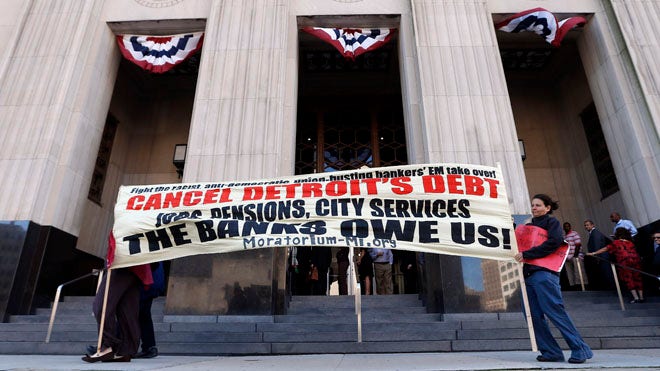
Protesters carry a sign outside the Levin Federal Courthouse in Detroit, Wednesday, July 24, 2013.AP


A judge is considering what to do with challenges to Detroit's bankruptcy from retirees who claim their pensions are protected by the Michigan Constitution.


U.S. Bankruptcy Judge Steven Rhodes settled into his chair shortly after 10 a.m. EDT. The city wants him to put a stop to lawsuits in other courts, especially after an Ingham County judge said state officials ignored the constitution and acted illegally in approving the bankruptcy last week.


The state appeals court temporarily stopped three lawsuits challenging the bankruptcy process on Tuesday.


As lawyers for some of the thousands of creditors arrived Wednesday, they passed protesters holding a banner saying: "Cancel Detroit's debt. The banks owe us."


The case is expected to last at least a year.


Michael Dell boosts buyout bid for PC maker


Dell Chairman and CEO Michael Dell delivers a keynote address during the Oracle OpenWorld event at the Moscone Center on Oct. 4, 2011, in San Francisco. Dell stepped down as CEO of the company on March 4, 2004, but returned as CEO on Jan. 31, 2007, at the request of the board. (Photo: Kimihiro Hosina, AFP/Getty Images)


Dell founder Michael Dell has increased his bid to buy out struggling personal computer maker Dell in a new effort to convince shareholders to support his plans to take the company private.


In a statement released Wednesday, Dell says the PC maker's founder and Silver Lake Partners are offering $13.75 per share to buy out the company, up from an original bid of $13.65.


A letter from Michael Dell says this offer is "our best and final proposal." A shareholder meeting to vote on the buyout bid has been rescheduled for August 2.


Follow Brett Molina on Twitter: @bam923.

Queen visits her new great

LONDON Britain's Queen Elizabeth II arrived at Kensington Palace Wednesday to see her new great-grandson, who has spent a first night at home with his parents, Prince William and Kate.


The 87-year-old monarch made a short trip from Buckingham Palace to visit the two-day-old Prince of Cambridge, who is third in line to the throne, then left, the British Broadcasting Corporation reports.


The baby's name hasn't been revealed yet. "We're still working on a name," William told reporters Tuesday as he and Kate took the baby home from St. Mary's Hospital.


Bookmaker William Hill has George -- the name of six previous British kings -- as the favorite at 2-to-1 odds, with James at 4-to-1.


Images of the prince, his little hand peeking above a white crocheted wrap, blanketed the front pages of British newspapers Wednesday. The Daily Mail offered a photo album image with the headline "Baby's first royal wave."


The prince slept through his debut public appearance -- though William assured the media he had "a good pair of lungs on him."


The new family is expected to spend time quietly at Kensington Palace, their London home. As well as choosing a name, William and Kate will soon choose a photographer for the baby's first official portrait.


William has two weeks' paternity leave from his job as a Royal Air Force search-and-rescue helicopter pilot.


Three hikers die in a month on scenic Southwest hiking trail


FILE - A May 28, 2013, file photo shows a hiker on a rock formation known as The Wave in the Vermilion Cliffs National Monument in Arizona. (AP Photo)


They left their two young children with relatives and set off to celebrate their fifth wedding anniversary at one of the most beautiful hiking destinations in the Southwest.


Months earlier, the luck of a draw had brought Anthony and Elisabeth Ann Bervel coveted hiking permits for The Wave, a region of richly colored sandstone patterns near the Utah-Arizona border.


But just hours into Monday's trek, 27-year-old Elisabeth Bervel died of cardiac arrest, becoming the third hiker in a month to succumb to the brutal summer heat and disorienting open country where no marked trail shows the way.


The deaths have prompted officials to reassess the dangers for people who make the hike and perhaps seek an outside investigation of the risks, said Kevin Wright, manager of Vermilion Cliffs National Monument.


"We're considering everything at this point," he said.


Only 20 hikers are granted permits each day, a limit defended as necessary to protect the rock formations and preserve a sense of wilderness around the signature rock formation said to be one of the most photographed spots in North America.


Hikers are given plenty of warnings about how to survive. They also get pictures of prominent landmarks and access to eight guides who can lead the way.


"It's not like going to Zion National Park and hiking on an asphalt trail," said Kane County sheriff's Sgt. Alan Alldredge. "Once you hit the slickrock, nothing distinguishes the trail."


"It seems to go well for people going to The Wave," he added. "But for some reasons on the way back, they end up getting lost."


The Bervels, of Mesa, Ariz., lost their way on a three-mile cross-country route back to a trailhead, forcing them to spend extra hours under blazing sun in 90-degree temperatures and humidity, he said.


Officials said Elisabeth Bervel's legs gave out hiking in soft sand, and her husband kept going to find a cellphone signal to call for help.


He appeared to be in no danger from the heat or exertion. But Kane County officials said he was distraught when he sat down Monday night to recount the tragedy. A phone listing for Anthony Bervel had been disconnected Tuesday.


"This event once again demonstrates the inherent risks associated with hiking in southern Utah's desert country," the Kane County Sheriff's Office said in a statement. "Even though the Bervels had tried to make sure they were prepared for this hike, the elements proved to be stronger."


The latest death led to further questions about the lottery system that makes it hard to land a permit for the hike that starts in Utah before reaching The Wave in Arizona. More than 48,000 people applied last year for 7,300 available permits, officials said.


Half of the 20 daily permits are doled out on a walk-in basis at a visitor's center in Kanab, with as many as 100 people showing up to get a permit for the next day.


The rest are awarded through an online lottery, with winners given a specific hiking date months in the future. For many, it's a lifetime opportunity, and the difficulty in getting permits prompts some people to go in the heat of the summer.


On July 3, Ulrich and Patricia Wahli of Campbell, Calif., were found dead in 106-degree heat.


About a year ago, a 30-year-old California man who spent much of a day at The Wave and tried to return after nightfall died after falling into a slot canyon, officials said.


"It does come back to personal discretion, and making choices," said Rachel Tueller, a spokeswoman for the Arizona Strip District of the U.S. Bureau of Land Management, which controls The Wave. "Anytime you go out on public land, it's a risk. You have to know your own capabilities."


Las Vegas officer plunges to his death while rescuing hiker

(CNN) -- When a call came in about a stranded hiker, Las Vegas Police Officer David Vanbuskirk hopped onto a helicopter with a rescue crew and rushed to retrieve the man from a cliff.


At Mount Charleston, a helicopter harness attached to Vanbuskirk lowered him toward the hiker -- dangerous terrain made foot rescue impossible. He retrieved the hiker and attached him to the rescue equipment, and signaled the aircraft to hoist them up.


As the helicopter did, Vanbuskirk got detached from the device and plunged into the canyon below Monday night, dying on impact, authorities said. The hiker was hoisted to safety.


After the fall, additional rescue crews scoured the canyon and found his body, officials said. It was unclear how far he fell.


"This officer dedicated his life to saving people and that act ultimately cost him his own life," Sheriff Doug Gillespie told CNN affiliate KVVU.


Vanbuskirk, 36, was a 13-year veteran of the Las Vegas Metropolitan Police Department, and worked with the rescue division for six years.


His friends had nicknamed him officer Rambo Dave for his love of the outdoors and the martial arts, CNN affiliate KTNV reported.


"David was one of the most sincere people, and I just can't believe it," Michael Connolly, a friend, told KTNV.


Vanbuskirk, who was married, is the first officer to die in the line of duty since 2009 in the the department, KVVU reported.


No information was released about the hiker.


Tuesday, July 23, 2013

Obama and Walker approvals slip below 50 percent in Marquette Law School Poll


MILWAUKEE -- A new Marquette Law School Poll finds that job approval ratings for Governor Scott Walker and President Barack Obama have slipped below 50% in Wisconsin.


Walker's job approval in July stands at 48%, with 46% disapproval. In May it was 51-45 and in March it was 50-44. Walker's approval has stood between 50 and 51 percent since the recall election in June 2012, falling below 50% in three of eleven polls including the latest one.


Obama's job approval in July is 47% with 46% disapproval. In May it was 50-45 and in March 48-45.


Despite their similar overall approval ratings, the public is strongly divided between the two: 34% approve of Obama and disapprove of Walker; 36% disapprove of Obama and approve of Walker. 11% approve of both while 9% disapprove of both. The remaining 10% lack an opinion about one or both.


Independent votes largely gave Obama a net negative evaluation of handling his job while giving Walker a net positive rating. On the other hand, "moderates" were more positive to Obama and negative to Walker.


Liberals and conservatives divided as expected with liberals backing Obama and conservatives backing Walker.


Regional differences also comes into play in this situation. Residents in the city of Milwaukee gave Obama a 71% approval rating, while the Madison population gave a 54% approval. Approval of Obama is lowest in the Milwaukee region outside the city, where 41% approve.


Walker's approval patterns are the opposite. His lowest numbers come from inside the city, with a 30% approval rating. Meanwhile outside the city he stands at a 52% approval.


Voters continue to see Wisconsin as lagging behind other states in job creation according to 48% of people. 21% if Republicans think the economy has improved over the past year, while 41% of Democrats think so. Among the Republicans who see improvement, 19% approve of Obama's handing of his job versus just 2% among those who think the economy is getting worse. Democrats who see improvement give the president a 95% approval, which drops to 80% among those who think it's worsening. Independents who see a better economy approve of Obama at 53% rate, while those who think it to be getting worse approve at a 36% rate.


The entire questionnaire, full results, and breakdowns by demographics group for this poll is available here


Lance Armstrong urges judge to dismiss government lawsuit


WASHINGTON (AP) -- Cyclist Lance Armstrong urged a federal judge Tuesday to dismiss the Justice Department's False Claims Act lawsuit against him, arguing that that the Postal Service got its money's worth out of its sponsorship deal and that the claims are barred by the statute of limitations.


In the filing in U.S. District Court in Washington, lawyers for Armstrong said the Postal Service, which sponsored Armstrong's cycling team, got exactly what it bargained for, including tens of millions of dollars' worth of publicity, exposure to more than 30 million spectators at international cycling events, and hundreds of hours of television coverage


The Justice Department this year joined former Armstrong teammate Floyd Landis' whistle-blower lawsuit against the disgraced cyclist. Under the False Claims Act, whistle-blowers can share with the government in any recovery of money based upon their disclosures.


The government claims that Armstrong violated his contract with the Postal Service and was "unjustly enriched" while cheating to win the Tour de France. That came following Armstrong's admission in January to using performance-enhancing drugs after years of denials.


"The government alleges that a single fact was hidden, and relies on that allegation to justify sitting on its claims for a decade: The Postal Service Cycling Team, like many other teams in the peloton, was doping," Armstrong's filing says. But Armstrong uses the government's own lawsuit to argue that the Postal Service should not have been in the dark. That lawsuit says that in the weeks preceding the 2000 agreement between the Postal Service and the cyclist's team, there were reports that French authorities had begun looking into allegations of doping by the team.


"Although the government now pretends to be aggrieved by these allegations, its actions at the time are far more telling," Armstrong's lawyers write. "Did it immediately fire the Postal Service Team? Did it suspend the team pending an investigation? Did it refer the matter to its phalanx of lawyers and investigators at the Department of Justice for review? It did not. Rather than exercise its right to terminate the sponsorship agreement, it instead renewed its contract to sponsor the team."


That's because Armstrong had recently won the 2000 Tour de France, and the government "wanted a winner and all the publicity, exposure and acclaim that goes along with being his sponsor," the lawyers argued. "That was more than a decade ago. It is now far too late for the government to revisit its choice to reap the benefits of sponsorship rather than investigate allegations of doping."


But the government's lawsuit said that for years, team officials assured the Postal Service that the team wasn't doping - a point it is sure to stress when it responds to the filing.


The government also noted that the contract with the Postal Service required riders to follow the rules of cycling, which included bans on performance-enhancing drugs and methods. Armstrong now admits using steroids, blood boosters and other illegal performance-enhancing drugs and measures to win.


The Postal Service paid about $40 million to be the title sponsor of Armstrong's teams from 1998 to 2004 - about $18 million of which went to Armstrong, according to the government's complaint, which asked for triple damages that are determined at trial.


Previous studies done for the Postal Service concluded it reaped at least $139 million in worldwide brand exposure in four years - $35 million to $40 million for sponsoring the Armstrong team in 2001; $38 million to $42 million in 2002; $31 million in 2003; and $34.6 million in 2004.


The lawsuit also named former team Armstrong team director Johan Bruyneel and team management company Tailwind Sports as defendants.


In a brief filing Tuesday, Bruyneel also asked that the government's case be dismissed, saying he was making the same arguments as Armstrong.


A lawyer representing Tailwind, meanwhile, said Tuesday that because the company dissolved in 2007, it can't be sued, and also urged the judge to dismiss all claims against it. In its filing, the government said the law in Delaware, where Tailwind was organized, allows for dissolved companies to exist for three years for the purpose of prosecuting and defending lawsuits - and that Landis' whistle-blower suit was filed in that period.


Copyright 2013 Associated Press. All rights reserved. This material may not be published, broadcast, rewritten, or redistributed.


Strong iPhone sales buoy Apple's third


Credit: Reuters/Mario Anzuoni


iPhone 5 models are pictured on display at an Apple Store in Pasadena, California July 22, 2013.


Wall Street's average forecast for Apple's revenue was $35.02 billion, according to Thomson Reuters I/B/E/S.


(Reporting by Poornima Gupta; Editing by Richard Chang)


Va. Gov. McDonnell sorry for 'embarrassment' to state


Virginia Gov. Bob McDonnell. (Photo: Bob Brown, Richmond Times-Dispatch via AP)


WASHINGTON -- Virginia Gov. Bob McDonnell said Tuesday he has repaid more than $120,000 to a political donor and apologized for bringing "embarrassment" to the state.


"Being governor of Virginia is the highest honor of my 37 years in public service," McDonnell, a Republican, said in a statement. "I am deeply sorry for the embarrassment certain members of my family and I brought upon my beloved Virginia and her citizens."


For months, McDonnell has been dogged by headlines in The Washington Post and other news outlets about his ties to Star Scientific CEO Jonnie Williams. Among other revelations, Williams picked up the $15,000 catering bill for the 2011 wedding of one of McDonnell's daughters and financed a $15,000 shopping spree for Maureen McDonnell, the governor's wife, at Bergdorf Goodman.


Federal and state authorities are investigating McDonnell and his ties to Williams, whose company makes dietary supplements. The news stories have damaged the reputation of McDonnell, a prominent Mitt Romney surrogate in 2012 who was once touted as a potential 2016 presidential candidate.


The repayments include $52,278.17 to cover a loan Williams made to Maureen McDonnell and $71,837 loaned to a real estate business co-owned by the governor and his sister. The repayments cover the principal of the loans and interest.


The statement from McDonnell represents a shift for the governor, who had previously criticized the news accounts of the gifts from Williams.


"I want you to know that I broke no laws and that I am committed to regaining your sacred trust and confidence," said McDonnell, who cannot run under state law for another term in 2014. "I hope today's action is another step toward that end. Virginia has never been stronger and Ii plan to focus on creating even more jobs and facilitation greater opportunity during the last five months of my term as your governor."


Follow @ccamia on Twitter.

"Whitey" Bulger Trial: Stephen Flemmi, ex


(CBS/AP) BOSTON - The star witness at the trial of James "Whitey" Bulger, the reputed gangster's former associate, tried Tuesday to counter the defense's claims that he's a pedophile by lobbing the same accusation back at Bulger.


PICTURES: Guns and Money: Whitey Bulger evidencePICTURES: James "Whitey" Bulger through the years

Stephen "The Rifleman" Flemmi had acknowledged in testimony that he engaged in oral sex with his longtime girlfriend's teenage daughter, Deborah Hussey, who had called him "Daddy."


Flemmi also testified that Bulger strangled Hussey after she started using drugs, getting arrested and dropping their names when she got in trouble.


But Bulger's lawyer Hank Brennan pressed Flemmi on his assertion and suggested that Flemmi, not Bulger, killed Hussey after she told her mother he molested her. Flemmi didn't want to be seen as a pedophile, Brennan said.


But Flemmi said that if Brennan wanted to talk about pedophilia, "right over there at that table," gesturing toward where Bulger was seated.


Bulger glanced at Flemmi but did not visibly react. Flemmi had told jurors earlier that Bulger once took a 16-year-old girl to Mexico with him. He did not say when that was.


Flemmi was in his fourth day testifying against the reputed Boston crime boss at Bulger's racketeering trial. Bulger, 83, is accused of participating in 19 killings during the 1970s and `80s while leading the notorious Winter Hill Gang. He fled Boston in 1994 and was one of the nation's most-wanted fugitives until he was captured in California two years ago.


Flemmi, 79, has pleaded guilty to 10 murders and is serving a life sentence.


Testifying Monday, Flemmi acknowledged that he twice had oral sex with Hussey in what he called "a moment of weakness."


Flemmi said Hussey's mother, Marion, had been his live-in girlfriend since Hussey was just a toddler and that she had called him "Daddy" from a young age.


"A girl who called you `Daddy' consented to sex with you?" Brennan asked.


Flemmi said the sexual contact took place when Hussey became "a different person" because of "her demeanor, her lifestyle." He said she had been frequenting Boston's Combat Zone, then a center of drugs and prostitution.


Neither Brennan nor Flemmi specified how old Hussey was at the time. She was 26 when she was killed in 1985.


Turning his testimony to her death, Flemmi said he reluctantly agreed to bring Hussey to a home in South Boston.


"Jim Bulger stepped out from behind the top of the basement stairs and grabbed her by the throat and started strangling her," Flemmi said. "He lost his balance and they both fell on the floor, and he continued strangling her."


According to Boston.com, Flemmi testified that he would have welcomed Bulger calling off Hussey's killing.


"He could have prevented it. All he had to do was say, 'Pass,'" Flemmi testified. "And I would have been so happy.''


However, at another point in Flemmi's testimony, Brennan forced him to look at the damage that was done to Hussey's corpse by displaying an image of her skull, with vacant spaces where her teen once were. It was then that Flemmi admitted to removing her teen with a pair of pliers after she was killed in an attempt to prevent the body from being identified.


"Does that refresh your memory of how many teeth you pulled?" Brennan asked.


Complete coverage of the Whitey Bulger case on Crimesider

"I don't want to see that,'' Flemmi said.


Michelle Nunn engages battle for Senate in Georgia

Democrats and Republicans envision a competitive race in 2014 that could help decide who holds power in U.S. Senate.

Democrat Michelle Nunn is running for the U.S. Senate in Georgia. (Photo: Kevin Wolf AP)


WASHINGTON -- Democrat Michelle Nunn's decision to follow in her father's footsteps in Georgia opens a new front in the battle for control of the Senate in the 2014 elections.


Nunn, CEO of a volunteer service organization, is expected to file her paperwork Tuesday to run for the seat of retiring Republican Sen. Saxby Chambliss. The political novice declared her long-awaited candidacy on Monday in an interview with the Atlanta Journal-Constitution.


This is the same Senate seat that her father, Sam Nunn, held from 1972 to 1997 as a centrist Democrat who appealed to GOP voters. The race to succeed Chambliss has already attracted three congressmen and a former Georgia secretary of State on the Republican side.


Democrats currently have a 54-46 voting advantage in the Senate and Republicans are already eyeing possible pickups in West Virginia, South Dakota and Montana, where the Democratic incumbents are not seeking re-election next year.


"Michelle Nunn makes this race competitive," said Merle Black, a political scientist at Emory University. "She has no experience but she has a great name. She clearly will be able to unify the Georgia Democratic Party and she'll be able to raise a tremendous amount of money."


Branko Radulovacki, an Atlanta physician, is also running for the Democratic nomination but party stalwarts are expected to line up behind Nunn.


Nunn told the Associated Press that she wants to get things working in the Senate. She pointed to her work as CEO of Points of Light, an organization founded by former President George H.W. Bush, as an example of how she can work across party lines.


"Wherever I go in Georgia people speak of their frustrations with what's not happening in Washington, that there is a focus on fighting instead of getting things done," Nunn told the AP. "I believe in the power of individuals to create change when they join together."


No Democrat currently holds a statewide elected office in Georgia and Sam Nunn was last on the ballot in 1990. President Obama lost to Mitt Romney last year in Southern states such as Alabama, Georgia and Mississippi, but had his best showing among them in Georgia, where he garnered 45%.


A divisive Republican primary could help the Democrats. Black noted that GOP Reps. Paul Broun and Phil Gingrey could have a tougher time raising money for a competitive general election race than Rep. Jack Kingston or former secretary of State Karen Handel, who forced a GOP runoff for governor in 2010. Broun and Gingrey have attracted attention in the past for some of their controversial comments about evolution and rape, respectively.


"The Republican primary has increasingly become a right-wing circus that will produce a flawed candidate like Todd Akin," said Justin Barasky, a spokesman for the Democratic Senatorial Campaign Committee. Akin is the Senate GOP nominee in Missouri who lost a race last year in large part due because of his comments about "legitimate rape."


Barasky said Nunn's background as a chief executive and her career devoted to service will appeal to voters across party lines, as well has her long history working with the Bush family.


Black said Nunn and the Democratic Party will have to be ready for Republican charges that she is "a liberal Obama-Pelosi Democrat," a charge that stuck in the special election for Congress earlier this year against Elizabeth Colbert Busch in South Carolina. Like Nunn, Colbert Busch had a famous name - her brother is comedian Stephen Colbert - but was largely unknown by voters. Republican Mark Sanford won the election.


"It takes more than just family ties to get elected to the Senate," said Brad Dayspring, a spokesman for the National Republican Senatorial Committee, "and we look forward to a robust debate about the Obama/Nunn agenda and the ramifications that it has on middle class families and women in Georgia."


Contributing: Associated Press

Cisco scoops up security firm Sourcefire for $2.7B

The exterior of Cisco headquarters is shown in San Jose, Calif. (Photo: Paul Sakuma, AP)


Tech networking firm Cisco says it is acquiring security company Sourcefire in a deal worth $2.7 billion.


In a statement released Tuesday, Hilton Romanski, Cisco's vice president of corporate development, says the Columbia, Md. based company "aligns well" with their broader plans for network security.


"Through our shared view of the critical role the network must play in cybersecurity and threat defense, we have a unique opportunity to deliver the most comprehensive approach to security in the market," says Romanski.


Shares of Sourcefire surged 29% following news of the acquisition.


Follow Brett Molina on Twitter: @bam923. USA NOW How safe are roller coasters? | USA NOW video

Middletons first to visit royal baby, say he's perfect


Prince William and the Duchess of Cambridge are seen leaving the King Edward VII hospital in central London. (Photo: Leon Neal, AFP/Getty Images)


LONDON -- We know it's a boy. We don't know his name, although we do know he will travel under the Prince of Cambridge moniker. But the next order of business is this: We want to know what he looks like.


The Duke and Duchess of Cambridge may be leaving St Mary's Hospital in central London on Tuesday after the royal baby was born Monday afternoon at 4:24 local time weighing in at 8lb. 6oz.


Now the world is eager for that first glimpse.


It is not clear how long the royal couple along with their new charge intend to stay at the private Lindo Wing of St Mary's, nor has the precise timing of the release of the baby's name been announced, but we do know that the Duke overnighted at the hospital with his new family and that the young couple "could not be happier" at the birth of their son.


Last night, thousands of well-wishers from around the world celebrated the birth outside Buckingham Palace.


"We were told it may not happen today (Monday), and we are going home tomorrow," said Asif Shah, a retired civil servant from Pakistan who was on vacation in London with his wife and daughter. "We feel very lucky," he said.


Mass. cop who shared photos of Boston bomb suspect to face hearing


A Massachusetts State Police sergeant who released photos of accused Boston bomber Dzhokhar Tsarnaev will face a hearing Tuesday to determine if he will be suspended until an internal investigation is complete, WBZ-TV reports.


Sgt. Sean Murphy was relieved of duty for one day after he released the photos to Boston Magazine last week in response to a controversial image on the cover of Rolling Stone magazine.


The photos show a downcast, disheveled Tsarnaev with the red dot of a sniper's rifle laser sight boring into his forehead. They were taken when Tsarnaev was captured April 19, bleeding and hiding in a dry-docked boat in a Watertown backyard.


Murphy said in a statement to Boston Magazine that Tsarnaev is evil and that his photos show the "real Boston bomber, not someone fluffed and buffed for the cover of Rolling Stone magazine."


The April 15 bombing killed three people and injured more than 260. Massachusetts Institute of Technology officer Sean Collier was allegedly killed April 18 by Tsarnaev and his brother, Tamerlan, who died following a shootout with police later that evening.


Three images showed Tsarnaev as he emerged from the boat, head bowed, with red smudges and streaks on his clothing and the boat.


Two images showed the red dot of the laser sight in the middle of his forehead and just above his left eye. The other showed the dot on the top of his head as he buries his face in his arms. In his statement, Murphy said the capture played out like a television show, but he hopes his photos show it was "as real as it gets."


A Facebook page called " Save Sgt. Sean Murphy" has received nearly 57,000 "likes," with many commenting Murphy made the right decision in leaking the photos of Tsarnaev bloodied while surrendering to authorities.


The U.S. Attorney's Office issued a statement to MyFoxBoston.com, calling the release of the photos "completely unacceptable."


KABARJOKOWI.BLOGSPOT.COM contributed to this report. Click here for more from WBZ-TV. Click here for more from MyFoxBoston.com.

Field Poll: Obama's job

Posted: 07/23/2013 06:00:00 AM PDT


Click photo to enlarge


Californians' approval of President Barack Obama's job performance has taken the sharpest dive of his presidency in recent months, according to a new Field Poll, with some of his most loyal supporters losing faith after revelations that the government is tracking Americans' phone and Internet use.


Where 62 percent of California voters approved of Obama's job performance in February, only 52 percent did so in late June and early July -- a sudden drop unprecedented among the president's recent peers. The falloff was largest among blocs that historically have given him high marks: registered Democrats' approval dropped by 14 points, nonpartisan voters' by 12 points, women's by 15 points and voters under age 40 by 14 points.


Based on that, poll director Mark DiCamillo said, "You could surmise that it does have to do with the surveillance and the authorization of this kind of unprecedented listening to of phone conversations and emails and that kind of thing."


Obama has faced harsh questions from many among his own base since details emerged last month of a clandestine mass electronic surveillance data-mining program.


Even so, the Golden State still generally likes him: 57 percent of Californians say they have a favorable view of the president overall, while 35 percent hold an unfavorable view. That's identical to how voters felt about him just before his re-election last year.


The difference is that 9 percent of all voters and 11


percent of rank-and-file Democrats who view Obama favorably now disapprove or are undecided about his job performance.


DiCamillo said this sudden drop-off in approval didn't happen in other recent presidents' second terms. President George W. Bush's approval rating dropped seven points from early to mid-2005, but that was part of a years-long downward slide, he said, while Presidents Bill Clinton and Ronald Reagan only lost a few points in their fifth years in office.


Corey Cook, director of the University of San Francisco's Leo T. McCarthy Center for Public Service and the Common Good, said he agrees "absolutely" with DiCamillo that revelations of domestic spying by intelligence and law enforcement agencies have hurt Obama's numbers.


The 10-point drop denotes "the more progressive voters, younger voters who have finally gotten disillusioned with Obama," Cook said, especially when many expected that he would move leftward after winning a second term.


Some have other complaints. Mary Zuniga, 66, a registered Democrat from San Jose, told the poll she generally feels favorable toward Obama but has no opinion of his job performance.


"I did vote for him, but he's kind of let me down on a few things, so I'm just not thrilled with his performance," she said Monday, explaining she's a disabled senior unhappy with Obama's failure to improve health care and taxes for people like her.


"I feel like it's not very good as it should be for older people who are poorer," Zuniga said. "I'd like to have somebody who's going to do what he said he's going to do and not switch."


But some supporters are sticking by the president. Democrat Lynn Jones, 46, approves of Obama's job performance and feels favorably toward him.


"A lot of the stuff that's been coming out in the news can't really be pinned on him as one person, even though he's at the helm -- he doesn't have a direct degree of control over everything," said the homemaker and English tutor from Martinez. "He's been so hampered by a Congress that just doesn't want to do anything but work against him."


By region, Obama's approval rating remained highest in Los Angeles, at 63 percent, followed by the Bay Area at 60 percent, the Central Valley at 45 percent, the rest of Northern California at 44 percent and the rest of Southern California at 43 percent.


The Field Poll surveyed 846 California registered voters from June 26 through July 21; the poll's overall margin of error is 3.5 percentage points.


Josh Richman covers politics. Contact him at 510-208-6428. Follow him at Twitter.com/josh_richman. Read the Political Blotter at IBAbuzz.com/politics.


At least six killed in new Cairo violence


Credit: Reuters/Stringer


1 of 11. Members of the Muslim Brotherhood and supporters of ousted Egyptian President Mohamed Mursi (back) clash with anti-Mursi protesters, along Qasr Al Nil bridge, which leads to Tahrir Square, in Cairo July 22, 2013.


Al-Ahram Online said police fired tear gas to quell the violence and several cars in the area were destroyed or set on fire.


Police sources said hundreds of pro-Mursi supporters clashed with local residents, street vendors and others near Cairo University's main campus in Giza province, south of Cairo. They said gunshots were fired and stones were thrown during the incident.


One person was killed and around 20 were injured on Monday in clashes between Mursi supporters and opponents in central Cairo. Around 100 have been killed since the army overthrew Mursi, elected last year, on July 3 after mass protests.


The Muslim Brotherhood said on the Facebook page of its Freedom and Justice Party (FJP), which Mursi headed before he was elected president in June 2012, that five were killed in Tuesday's clashes.


"Leaders of the military coup continue to terrorize the peaceful protesters in Egypt," the FJP said in a statement in English.


The Brotherhood accuses the army of orchestrating a coup that has exposed deep political divisions in the Arab world's most populous and influential nation.


FJP said the ministers of defense and interior, whom it called "the leaders of the coup," would be held responsible for any future attempts to evacuate the Brotherhood protest areas.


Mursi's supporters are maintaining a round-the-clock vigil, now in its third week, in a Cairo suburb. They say they will continue until Mursi, held by the army in an unknown location since his ouster, is reinstated.


Some residents close to the Brotherhood's main protest area in Nasr City have filed a complaint with the public prosecutor asking for the removal of the protesters, who they say are disturbing their lives.


An informed security source said the case is expected to be taken to a court and ruled upon soon "to give the army a legal basis to end the protests."


(Reporting by Yasmine Saleh and Ahmed Tolba; Writing by Yasmine Saleh; Editing by Eric Walsh)


Monday, July 22, 2013

Detroit bankruptcy case heads to Wednesday hearing on challenges


Credit: Reuters/ Rebecca Cook


A sculptor of a giant fist in honor of American boxer and heavy weight champion Joe Louis sits at the intersection of Woodward and Jefferson Avenue in downtown Detroit, Michigan July 21, 2013.


U.S. Bankruptcy Court Judge Steven Rhodes agreed on Monday to a request by Detroit Emergency Manager Kevyn Orr to fast track a hearing on whether other courts can hear lawsuits against Detroit, while it seeks federal bankruptcy court protection.


Concerned that retirement benefits will be slashed, Detroit retirees, workers and pension funds have filed three lawsuits, including one backed by the United Auto Workers union, in state court in an effort to derail the biggest Chapter 9 municipal bankruptcy in U.S. history.


A Michigan court judge, for instance, has ordered Orr to withdraw the July 18 bankruptcy filing.


The American Federation of State, County and Municipal Employees Council 25, which represents about 70 percent of Detroit's civilian workforce, on Monday argued if the other lawsuits were stopped, Orr, Michigan's governor and others would be able to continue to operate beyond state constitutional authority.


However, many legal experts said they expect Judge Rhodes to put the other cases on hold.


"Federal bankruptcy law generally trumps state law," and is designed to do so, said Stuart Gold, a Detroit-based bankruptcy lawyer at Gold Lange & Majoros PC.


UNIONS: WE NEVER SAT DOWN WITH ORR


If Orr's request to put those lawsuits on hold is granted, top Michigan state officials, Orr and others would also be protected from litigation regarding last Thursday's bankruptcy petition.


Detroit, a former manufacturing powerhouse and cradle of the U.S. automotive industry and Motown music, has struggled for decades as companies moved or closed, crime became rampant and its population shriveled by about 25 percent in the past decade to 700,000. The city's revenue failed to keep pace with spending, leading to years of budget deficits and a dependence on borrowing to stay afloat.


To remain in bankruptcy court, Detroit must prove that it is insolvent and that it made a good faith effort to negotiate with its creditors, including its employee pension funds, over the city's more than $18 billion of debt, which includes $5.7 billion in unfunded liabilities for healthcare and other retiree benefits and a $3.5 billion pension liability.


Orr told National Public Radio on Monday that the city is broke. "It doesn't matter what I say, it doesn't matter what we look back on, there's just no money," he said.


AFSCME leaders on Monday said that Orr had rebuffed efforts by unions to discuss the issues.


"Not once, did (Orr's) representatives sit down and seek to negotiate a solution with our union," Steven Kreisberg, national director for collective bargaining for AFSCME, told a news conference.


"Our members and our retirees were never given the opportunity to address the serious issues of the type of cutback that the emergency manager is seeking," he said.


Orr has not specified how much pensions or retiree health care will have to be cut, although his June 14 proposal to creditors called for "significant cuts in accrued, vested pension amounts for both active and currently retired persons."


Orr spokesman Bill Nowling said the unions were never promised negotiations. "We will meet with the unions if they ever put a counterproposal on the table."


Under Michigan's emergency manager law the city was not obligated to negotiate in collective bargaining with the unions, Nowling said. "It's a mischaracterization to say they were promised negotiations."


Pensioners could attempt to appeal to the federal district court any order by Judge Rhodes enforcing the stay of litigation against Detroit. But, because such an order would not be considered a final judgment under bankruptcy laws, the federal court could refuse to hear the appeal, Gold said.


In a declaratory judgment on Friday, Ingham County Circuit Court Judge Rosemarie Aquilina said the state law that allowed Michigan Governor Rick Snyder to approve the bankruptcy filing violated the Michigan Constitution. The governor cannot take actions that would violate constitutional protections for retirement benefits for public workers, she said.


Aquilina on Monday morning adjourned a hearing in another case brought by city pension plans with no action taken. The pension plans asked for the proceedings to be postponed one week to July 29.


The historic bankruptcy filing roiled the $3.7 trillion municipal bond market on Friday, sending prices lower and yields higher on some bonds. But the market, where states and cities like Michigan and Detroit borrow money, settled down and prices barely budged on Monday.


(Additional reporting by Karen Pierog, Jonathan Stempel, Nick Brown and Deepa Seetharaman, writing by Karen Pierog; Editing by Dan Burns, Nick Zieminski and Tim Dobbyn)


Michigan leaders defend Detroit bankruptcy filing, put blame for woes on city


Michigan Gov. Rick Snyder and the bankruptcy specialist he appointed to fix Detroit's unprecedented financial problems put the blame Sunday squarely on the city and defended their decision to file for Chapter 9.


The Republican governor said Detroit created the problems and stood steadfast behind his decision to file Thursday for bankruptcy, with the city roughly $19 billion in debt.


"This is a tragic, difficult decision, but a right one," he told CBS' "Face the Nation." "It's not about just more money, it's about accountable government."


He said corruption and city leaders ignoring warning signs for 60 years contributed to the problems. Among his biggest concerns, Snyder said, is the decline of municipal services for Detroit's remaining 700,000 residents, including police response times of nearly one hour.


Snyder said the state cannot help and asking for a federal bailout is "not the right answer," though Washington has that option.


The Obama administration has extended no offer to help, after Congress and the White House agreed to bail out Chrysler and General Motors during the recent recession.


"Can we help Detroit? We don't know," Vice President Joe Biden said last week. His remarks followed White House Press Secretary Jay Carney appearing to rule out such assistance.


"That's something that local leaders and creditors are going to have to resolve," he said. "But we will be partners in an effort to assist the city and the state as they move forward."


Among the emerging concerns is that the federal government would have to help repeatedly, considering Chicago reportedly has an unfunded pension liability of at least $19 billion while Los Angeles' is estimate to be as much as $30 billion.


"There are a lot of other cities right behind Detroit," Republican strategist Ron Bonjean told Fox News on Sunday.


Kevyn Orr, the emergency manager and bankruptcy lawyer appointed by Snyder, made comments similar to the governor's on Sunday but avoided questions about a possible government bailout.


"This is the only way," he told "Fox News Sunday." "We were compelled to file for bankruptcy."


Orr said his goal is to restructure the debt, including roughly $3.5 million in underfunded pension liabilities, and to get Detroit on its feet again by fall 2014.


He also said he has appealed a judge's ruling Friday that the bankruptcy violates Michigan's constitution, which protects government employees' pensions.


Orr also said that his plan would extend full payments only to pensioners for the next six months and acknowledge the hardship it will cause.


"This is very personal to me," he said. "My mother is a pensioner."


Still, he said Detroit "dug this hole," in part by not addressing its problems earlier.


With a population of 1.8 million in the 1950s, Detroit's slow decline started with residents migrating to the suburbs in the 1960s and was accelerated by automakers leaving Detroit, which diminished the city's tax base and made it difficult for officials to provide basic services such as police protection.


The filing makes the city the largest in the United States to file for bankruptcy.


Orr also defended criticism from the financial sector, saying potential investors will look at an improved Detroit, not the old one.


I remember when people said "nobody will ever buy a car from a bankrupt automaker," Orr said.